
- Environmental Conservation ·


The Black Rhino is listed as critically endangered and the white are threatened. There is a belief that the horn of a Rhino will cure a number of illnesses but this has never been proven. Regardless horns are sold at a very high price making the illegal trade of sale highly attractive to poachers. These poachers will stop at nothing and easily kill hundreds of rhino’s just to get the horn and sell on then illegal trade market. We need to act NOW
Rhino poaching is a devastating problem across both the public and private sectors. Everyday at least three rhino are poached in South Africa predominately due to lack of resources and intelligence. We are fighting a war with criminal masterminds who are forever 2 steps ahead of the protectors on the ground. The financial incentive to rhino poachers combined with very high unemployment figures in rural communities, mean that poachers will force entry into these reserves to get a shot at a Rhino.
This project has multiple elements to it;
1. Closed Rhino Rehab Centre – Our centre is closed to public because we really do reintroduce them into the wild and allowing too much human interaction can prevent this.
2. Anti poaching – we use K9’s, retired racehorses to help with reserve perimeter patrols to help keep the reserves safe from poachers (this also save on fuel)
3. Emergency Response to poacher alarms
4. Community Outreach – engaging children to be ambassadors for us in the community
The success of this project will significantly improve the security of the wildlife protected by this game reserve, deter illegal rhino poachers and enable a fast and effective reaction when any illegal activity on the reserve is reported. Protection of the rhino and other wildlife will ensure the sustainability of eco-tourism ventures on the reserve and thus survival of the reserve itself. Lodges on this reserve employ hundreds of people from surrounding communities, jobs that will be lost if these businesses are not able to secure their key assets – their wildlife.
By Shayle Havemann | Project leader
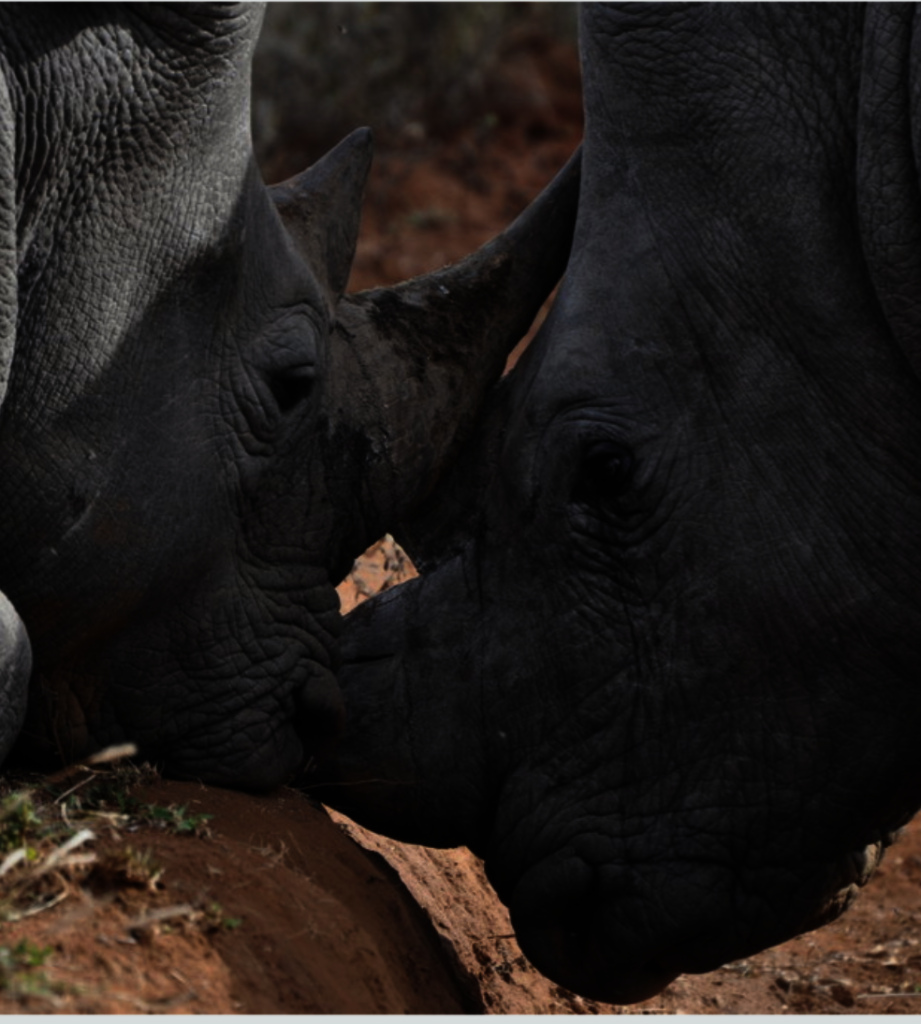 Everyday at least three rhino are poached in South Africa predominately due to lack of resources and intelligence. We are fighting a war with criminal masterminds who are forever 2 steps ahead of the protectors on the ground. The financial incentive to rhino poachers combined with very high unemployment figures in rural communities, mean that poachers will force entry into these reserves to get a shot at a Rhino. Anti poaching is achieved using K9’s, retired racehorses to help with reserve perimeter patrols to help keep the reserves safe from poachers (this also save on fuel). We hope to provide awareness and education to breakdown this illegal trade and ensure the rhinos do not die out. A donation of $25 provides food for the K9 patrolling the perimeter fencing thank you for you support.
By Tyrone Bennett | CEO / Based in South Africa
Hello to all our wonderful and amazing supporters,
I am writing this to you from the heart of our operations, and I wanted to start by simply saying thank you. As we celebrate 20 years of Action Change in 2026, I’ve been reflecting on how it’s truly people like you who make this work possible. You aren’t just “donors” to us; you are the reason these rhinos still have a chance to roam free.
The last few months here in Hoedspruit, Limpopo, have been a bit of a whirlwind. If you saw the news in January, you know we were hit by massive floods. It was a really intense time and we had to help with evacuations, and the landscape changed overnight. While it was incredible to see how the rhinos adapted by moving to higher ground, the water wasn’t so kind to our infrastructure. We lost a significant amount of fencing, security equipment, and those vital motion-sensor cameras that act as our “eyes” in the bush.
But here is the good news: because of your previous support, we didn’t miss a beat. When the quads and trucks were stuck in the mud, our horses and K9 units stepped up. Our rangers have been incredible, working double shifts to cover the gaps where our technology went offline. Your donations have been keeping these teams fed, housed, and out on the front lines during some of the toughest conditions we’ve faced in years.
As the sun comes out and the bush starts to dry, we are now in a bit of a race. This is the time when poachers try to take advantage of weakened fences and offline cameras. We aren’t letting them. Our team is currently “all hands on deck” to accelerate our repairs and get our surveillance tech back online.
This is where I have some really exciting news. To help us with this recovery, we are participating in GlobalGiving’s “Little by Little” campaign from March 17th to the 20th. During these four days, every donation up to $50 will be matched at 50%!
This is a huge opportunity for us. If you’ve been thinking about helping us replace a camera or repair a section of fencing, this is the week to do it. That $50 becomes $75, and that extra bit goes a long way when we are rebuilding from the ground up. It’s the perfect way to make a “little” go a long way in keeping our rhinos safe.
We’ve proven that our strategy works as our dehorning program has already dropped the poaching risk by 95%, now we just need to get our “walls” back up. Thank you for being with us through 20 years of challenges. I know that with your help during the Little by Little week, we’ll come out of this flood season stronger than ever.
Thank you for being such a huge part of this journey. We are so grateful to have you in our corner!
With massive gratitude,
Ty
By Andre | Program Science Lead (Newly Appointed Volunteer)
The Black Rhino is listed as critically endangered and the white are threatened. There is a belief that the horn of a Rhino will cure a number of illnesses but this has never been proven. Regardless horns are sold at a very high price making the illegal trade of sale highly attractive to poachers. These poachers will stop at nothing and easily kill hundreds of rhino’s just to get the horn and sell on then illegal trade market. We need to act NOW
Rhino poaching is a devastating problem across both the public and private sectors. Everyday at least three rhino are poached in South Africa predominately due to lack of resources and intelligence. We are fighting a war with criminal masterminds who are forever 2 steps ahead of the protectors on the ground. The financial incentive to rhino poachers combined with very high unemployment figures in rural communities, mean that poachers will force entry into these reserves to get a shot at a Rhino.
This project has multiple elements to it;
1. Closed Rhino Rehab Centre – Our centre is closed to public because we really do reintroduce them into the wild and allowing too much human interaction can prevent this.
2. Anti poaching – we use K9’s, retired racehorses to help with reserve perimeter patrols to help keep the reserves safe from poachers (this also save on fuel)
3. Emergency Response to poacher alarms
4. Community Outreach – engaging children to be ambassadors for us in the community
The success of this project will significantly improve the security of the wildlife protected by this game reserve, deter illegal rhino poachers and enable a fast and effective reaction when any illegal activity on the reserve is reported. Protection of the rhino and other wildlife will ensure the sustainability of eco-tourism ventures on the reserve and thus survival of the reserve itself. Lodges on this reserve employ hundreds of people from surrounding communities, jobs that will be lost if these businesses are not able to secure their key assets – their wildlife.
By Shayle Havemann | Project leader
Everyday at least three rhino are poached in South Africa predominately due to lack of resources and intelligence. We are fighting a war with criminal masterminds who are forever 2 steps ahead of the protectors on the ground. The financial incentive to rhino poachers combined with very high unemployment figures in rural communities, mean that poachers will force entry into these reserves to get a shot at a Rhino. Anti poaching is achieved using K9’s, retired racehorses to help with reserve perimeter patrols to help keep the reserves safe from poachers (this also save on fuel). We hope to provide awareness and education to breakdown this illegal trade and ensure the rhinos do not die out. A donation of $25 provides food for the K9 patrolling the perimeter fencing thank you for you support.By Tyrone Bennett | CEO / Based in South Africa
Hello to all our wonderful and amazing supporters,
I am writing this to you from the heart of our operations, and I wanted to start by simply saying thank you. As we celebrate 20 years of Action Change in 2026, I’ve been reflecting on how it’s truly people like you who make this work possible. You aren’t just “donors” to us; you are the reason these rhinos still have a chance to roam free.
The last few months here in Hoedspruit, Limpopo, have been a bit of a whirlwind. If you saw the news in January, you know we were hit by massive floods. It was a really intense time and we had to help with evacuations, and the landscape changed overnight. While it was incredible to see how the rhinos adapted by moving to higher ground, the water wasn’t so kind to our infrastructure. We lost a significant amount of fencing, security equipment, and those vital motion-sensor cameras that act as our “eyes” in the bush.
But here is the good news: because of your previous support, we didn’t miss a beat. When the quads and trucks were stuck in the mud, our horses and K9 units stepped up. Our rangers have been incredible, working double shifts to cover the gaps where our technology went offline. Your donations have been keeping these teams fed, housed, and out on the front lines during some of the toughest conditions we’ve faced in years.
As the sun comes out and the bush starts to dry, we are now in a bit of a race. This is the time when poachers try to take advantage of weakened fences and offline cameras. We aren’t letting them. Our team is currently “all hands on deck” to accelerate our repairs and get our surveillance tech back online.
This is where I have some really exciting news. To help us with this recovery, we are participating in GlobalGiving’s “Little by Little” campaign from March 17th to the 20th. During these four days, every donation up to $50 will be matched at 50%!
This is a huge opportunity for us. If you’ve been thinking about helping us replace a camera or repair a section of fencing, this is the week to do it. That $50 becomes $75, and that extra bit goes a long way when we are rebuilding from the ground up. It’s the perfect way to make a “little” go a long way in keeping our rhinos safe.
We’ve proven that our strategy works as our dehorning program has already dropped the poaching risk by 95%, now we just need to get our “walls” back up. Thank you for being with us through 20 years of challenges. I know that with your help during the Little by Little week, we’ll come out of this flood season stronger than ever.
Thank you for being such a huge part of this journey. We are so grateful to have you in our corner!
With massive gratitude,
Ty
By Andre | Program Science Lead (Newly Appointed Volunteer)


