
- Environmental Conservation ·


Many African countries rely heavily on agriculture as their source of income and in many cases, families often grow their own food due to lack of income/ access to shops. These pressures can be further amplified due to the fact that water is scarce in many African countries. Our answer to these issues are innovative farming solutions such as vermi-aquaponics, which allow for these critical areas to continue farming successfully even in times of extreme drought, as these systems use 10% of the amount of water that normal farming solutions require.
Africa has experienced extreme drought over the last years, causing severe pressure on the agricultural industry and contributed to the loss of income and hunger. By providing innovative agricultural solutions which increase the yield produces and reduce resources required, Africa will be able to not only feed themselves but also become sustainable. The solutions have less impact on the planet and offer opportunities for education and skills development for the community.
As a result of climate change, which has a large negative effect on the agricultural industry. Agriculture is a core business in Africa which is not only a large income for export, but also for local and private consumption. Thus, without water much land is running dry, making it impossible to farm. Simultaneously, the rest of the world is advancing to innovative farming methods making Africa, yet again fall behind.
Innovative agricultural solutions use integrated organic farming systems that combine vermiculture, aquaponics and small livestock to provide higher yield with fewer resources. The system only needs 10% of the water normally used for gardening, making it possible to farm even during extreme drought. By developing this system at schools, teachers get the opportunity to use it as practical teaching material, feed their students or sell the crop produced to generate income and be self-sufficient.
By providing schools and institutions with solutions which provides a high yield of produce regardless of soil and rainfall, schools in Africa will no longer be reliant on outside support. This will reduce the need for funding to purchase school resources, and the support required for feeding programs. In addition, it will reduce the pressure on the planet as water will be recycled and the clean water can rather be used for drinking and sanitation.
By Clive Nyapokoto | Zimbabwe Lead
Dear Friends and Supporters,
We recently returned from visiting our schools in rural Zimbabwe, and we have a story to share that highlights both the incredible resilience of these communities and the massive opportunity we have to change their future.
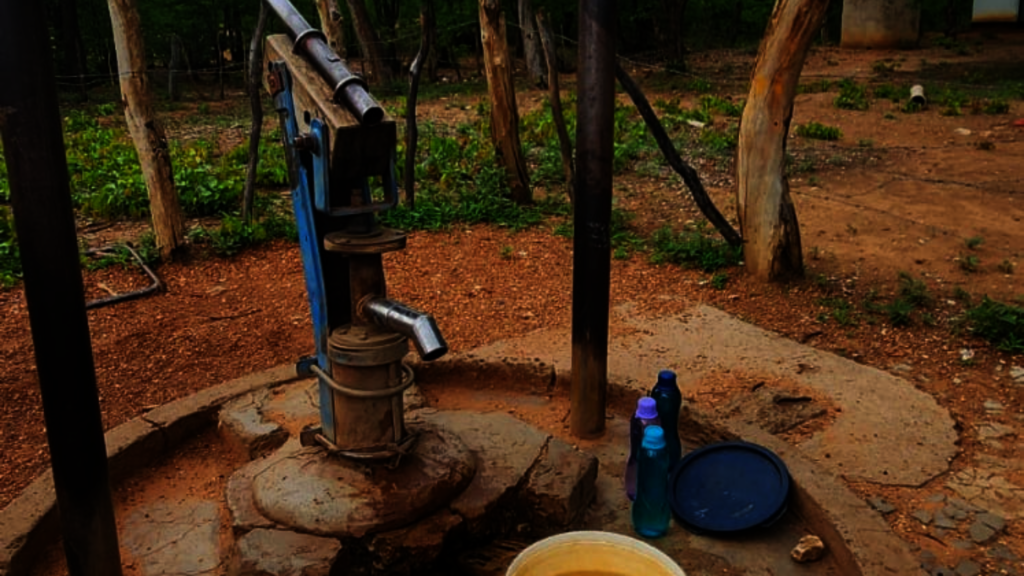
The “Gym Class” Nobody Asked ForThirty years ago, humanitarian efforts installed manual boreholes across rural Zimbabwe. While these have been a lifeline, the reality today is grueling. To prepare the nutrient-rich meals that your donations provide to 9,000 children every single day, we need water.
Currently, two children from every class are sent to the borehole with 5-litre buckets. They pump non-stop for about 40 minutes just to get enough water for the day’s needs. It’s a workout they shouldn’t have to do. The good news? Our recent tests confirmed the water is safe even though it is brown. The bad news? It’s currently trapped behind manual labor and heavy iron pumps and children are being pulled out of their class to get 5 Litres of water. takes. around 40 minutes.
The Vision: A Sustainable SchoolWe have a “Big Hairy Audacious Goal.” We don’t just want to feed these children; we want the schools to be able to feed themselves. By combining solar power, aquaponics, and poultry, we can reduce a school’s monthly food bill by 97% and give them access to running water.
Here is our 3-Step Roadmap to Independence:
Step 1: Solar Power & Connectivity (£2,000 per school) We are replacing manual pumps with solar-powered systems. This provides constant running water to the school, ending the “bucket brigade” and freeing children to be in the classroom, not at the pump.
Step 2: Aquaponics Installation (£2,900 per school) Building on our last report, these systems use 90% less water than traditional gardens. They provide fresh, high-protein greens and fish to supplement the dry nutrient packs we currently serve.
Step 3: Poultry Projects The final piece of the puzzle to provide consistent protein and a surplus that schools can manage themselves.
We are currently managing a massive monthly food bill to ensure no child goes hungry and we have so heavily relying on large amounts of water. It is vital work, but it is a recurring cost. By investing in these three steps, we aren’t just buying a meal; we are buying a permanent solution.
£4,900 (Steps 1 and 2) transforms a school of 400 children from being 100% dependent on aid to being almost entirely self-sufficient.
Let’s Start TodayThis is a big job, and with 30 rural schools on our list, we know it won’t happen overnight. But we are starting now. Whether it’s £10 or £1,000, every cent goes toward that first solar panel or the first aquaponic tank.
Thank you for being the reason 9,000 children eat today, and the reason they will be sustainable tomorrow.
With hope and determination and thank you to everyone that has already donate to our water program! We’re making real impact
Many African countries rely heavily on agriculture as their source of income and in many cases, families often grow their own food due to lack of income/ access to shops. These pressures can be further amplified due to the fact that water is scarce in many African countries. Our answer to these issues are innovative farming solutions such as vermi-aquaponics, which allow for these critical areas to continue farming successfully even in times of extreme drought, as these systems use 10% of the amount of water that normal farming solutions require.
Africa has experienced extreme drought over the last years, causing severe pressure on the agricultural industry and contributed to the loss of income and hunger. By providing innovative agricultural solutions which increase the yield produces and reduce resources required, Africa will be able to not only feed themselves but also become sustainable. The solutions have less impact on the planet and offer opportunities for education and skills development for the community.
As a result of climate change, which has a large negative effect on the agricultural industry. Agriculture is a core business in Africa which is not only a large income for export, but also for local and private consumption. Thus, without water much land is running dry, making it impossible to farm. Simultaneously, the rest of the world is advancing to innovative farming methods making Africa, yet again fall behind.
Innovative agricultural solutions use integrated organic farming systems that combine vermiculture, aquaponics and small livestock to provide higher yield with fewer resources. The system only needs 10% of the water normally used for gardening, making it possible to farm even during extreme drought. By developing this system at schools, teachers get the opportunity to use it as practical teaching material, feed their students or sell the crop produced to generate income and be self-sufficient.
By providing schools and institutions with solutions which provides a high yield of produce regardless of soil and rainfall, schools in Africa will no longer be reliant on outside support. This will reduce the need for funding to purchase school resources, and the support required for feeding programs. In addition, it will reduce the pressure on the planet as water will be recycled and the clean water can rather be used for drinking and sanitation.
By Clive Nyapokoto | Zimbabwe Lead
Dear Friends and Supporters,
We recently returned from visiting our schools in rural Zimbabwe, and we have a story to share that highlights both the incredible resilience of these communities and the massive opportunity we have to change their future.
The “Gym Class” Nobody Asked ForThirty years ago, humanitarian efforts installed manual boreholes across rural Zimbabwe. While these have been a lifeline, the reality today is grueling. To prepare the nutrient-rich meals that your donations provide to 9,000 children every single day, we need water.
Currently, two children from every class are sent to the borehole with 5-litre buckets. They pump non-stop for about 40 minutes just to get enough water for the day’s needs. It’s a workout they shouldn’t have to do. The good news? Our recent tests confirmed the water is safe even though it is brown. The bad news? It’s currently trapped behind manual labor and heavy iron pumps and children are being pulled out of their class to get 5 Litres of water. takes. around 40 minutes.
The Vision: A Sustainable SchoolWe have a “Big Hairy Audacious Goal.” We don’t just want to feed these children; we want the schools to be able to feed themselves. By combining solar power, aquaponics, and poultry, we can reduce a school’s monthly food bill by 97% and give them access to running water.
Here is our 3-Step Roadmap to Independence:
Step 1: Solar Power & Connectivity (£2,000 per school) We are replacing manual pumps with solar-powered systems. This provides constant running water to the school, ending the “bucket brigade” and freeing children to be in the classroom, not at the pump.
Step 2: Aquaponics Installation (£2,900 per school) Building on our last report, these systems use 90% less water than traditional gardens. They provide fresh, high-protein greens and fish to supplement the dry nutrient packs we currently serve.
Step 3: Poultry Projects The final piece of the puzzle to provide consistent protein and a surplus that schools can manage themselves.
We are currently managing a massive monthly food bill to ensure no child goes hungry and we have so heavily relying on large amounts of water. It is vital work, but it is a recurring cost. By investing in these three steps, we aren’t just buying a meal; we are buying a permanent solution.
£4,900 (Steps 1 and 2) transforms a school of 400 children from being 100% dependent on aid to being almost entirely self-sufficient.
Let’s Start TodayThis is a big job, and with 30 rural schools on our list, we know it won’t happen overnight. But we are starting now. Whether it’s £10 or £1,000, every cent goes toward that first solar panel or the first aquaponic tank.
Thank you for being the reason 9,000 children eat today, and the reason they will be sustainable tomorrow.
With hope and determination and thank you to everyone that has already donate to our water program! We’re making real impact


