
- Community Development ·


A gift to this project is a life-changing gift for a cat or dog currently on the streets of Nepal. Any animal lover would be horrified at the harshness of the lives of street animals in Nepal. The goal of the project is to assist our local partners in continuing its animal welfare programmes. This project aims to end the culling of street animals and give thousands of cats and dogs happier and healthier lives within their communities.
The cruel living situations of the stray animals in Nepal is truly a horrifying sight, and with no government assistance, the poorer communities are suffering from a number of issues caused by the high stray population numbers. These animals contract and spread disease, affecting health and wellbeing in the area and the lack of funding means most animals are not neutered or spayed meaning they reproduce freely. Our project aims to combat these issues and educate the community in the process
The situation for strays in Nepal is truly horrifying and would be enough to upset anyone. Not only are these animals suffering from disease and the local authority poisoning campaigns but they also have no veterinary help and have to scavenge for food and water. Government institutions in Nepal give no assistance to animal welfare and there are no other animal welfare charities working in our partner areas, so our project is the only opportunity for help for these dogs and cats.
By neutering, vaccinating and treating street animals we produce a healthy dog and cat population that locals can respect and care for properly. By working with local authorities repeating core programmes that tackle this issue through spading, protecting and providing emergency care for stray animals, we will enable the continuation of programmes that have helped thousands of animals. With your support, we aim to roll this project out to wider communities and villages
Our partners will benefit thousands of more dogs over its next year of operation. The local communities will be protected from rabies and from other zoonotic diseases. Attitudes to animals will continue to evolve and their treatment will improve. Visitors will enjoy its beautiful location and charming facilities without being haunted by scared, diseased and unhappy animals roaming its streets, together we can improve a community and benefit the lives of thousands of vulnerable animals
By William Day | Impact and Operations Officer
By Ruban | Project Volunteer
Dear Friends and Supporters,
Remember Ratey? Three legs, zero self pity, back home in Manang like he owns the place. That is where we left you in February and honestly that energy has not let up for a single day since.
What has happened in Nepal over the last few months is nothing short of remarkable. So grab a cup of tea because we have got a lot of good news to share.
The satellite camps have gone into overdrive. Since February our team has packed up surgical kits and driven deep into some of the most remote corners of Nepal, places that have never had a vet visit before. In Ramgram Municipality we targeted 125 dogs and neutered 126. The team treated two cases of pyometra, two cases of TVT, dealt with heat that would make you wilt, and still hit every single target. In Laljhadi Rural Municipality in Kanchanpur district, 103 dogs were sterilised and vaccinated. In Belauri, 116 more. In Beldandi, the team pushed through rain and difficult roads to wrap up a brilliant partnership with Bird Conservation Nepal covering 323 dogs across Kanchanpur district in total. And then, just to finish things off properly, the team drove to Arghakhanchi and sterilised another 119 dogs across Panini Rural Municipality. They were away from home for 16 days on that last stretch. Sixteen days sleeping in the field, driving 4x4s into remote hillside villages, stopping at a temple on the way to say a prayer for a safe journey. These are the people your donations fund and they are absolutely extraordinary.
Oh and one moment that stopped everyone in their tracks. On the final day of the Rukum East camp, a woman arrived after a five hour walk from her village. She had left home at 6am to make sure her dog could be sterilised and vaccinated. The team arranged transport home for her and the dog after the procedure. When people make that kind of effort, you know this work means something.
Then there are the individual rescues and every single one of them is a story worth telling.
Mannu arrived with what looked like a ruptured tumour. It turned out to be a severe maggot wound. Three weeks of daily treatment later, she was spayed, vaccinated, and back in her community looking like a completely different dog.
Kale was found by a tourist in Sauraha with a deep infected wound on his shoulder. Twenty days of care. Fully healed. Back home.
Gajalu, who many of you will know from our program, was rushed in by a local animal lover who arrived in tears after finding him with deep wounds to his neck and face. He had been with us before for mange treatment. He clearly trusts us, and that trust goes both ways. He went home on June 9th, stitches out, tail wagging.
Lurey had a wound on his head so deep it exposed part of his skull. He had been left untreated for two to three days. Our team removed the maggots, cleaned the wound, sutured it, and six weeks later he was back with the person who rescued him.
Kali came in after a hit and run in Pokhara Lakeside, brought by a visitor from Kazakhstan who could not just walk past. Fractured jaw. Deep head wound. She had already lost an eye in a previous incident. A month of intensive care and jaw wiring later, Kali went home to the local animal lover who feeds her every day.
And then there is Puntu. A tiny puppy rescued from the street with a maggot wound so severe it had nearly reached the bone of his skull. The little guy became an instant favourite in the clinic, playing with everyone despite everything he was going through. After a month of treatment and two weeks of searching for the right home, Puntu went to live with Sunita didi from Bharatpur. He is going to be absolutely spoiled and he deserves every second of it.
We have also been thinking about the long game. Our team ran rabies and animal welfare awareness sessions for 130 students across two schools, teaching children how to read dog body language, why neutering matters, and how to be kind and responsible around animals. These kids are the future of their communities and every session we run plants a seed that will grow for decades.
Since our last report, across all camps and clinic days combined, your donations have helped our team reach and treat well over 1,000 animals, with hundreds more sterilised, vaccinated and returned safely to their communities. Every single one of them is alive, healthy and protected because you chose to give.
By Ruban | Volunteer
Dear Friends and Supporters,
February has been a whirlwind of activity for our team in Nepal. From remote mountain rescues to bustling town-center clinics, your support has traveled across difficult terrain to reach animals that truly have no one else.
The Bravery of RateyIn early February, we received a call from a high-ranking official (DSP Paudel) in the remote Manang region. He had been caring for a street dog named Ratey, who had a severely fractured and infected leg. While many suggested the “easy” way out, the DSP chose compassion and reached out to our team.
After a long journey to our clinic in Pokhara, our medical team realized that the only way to save Ratey’s life was to perform an amputation. Ratey was a “gentle soul” throughout his surgery and recovery. By February 22nd, he returned home to Manang—a proud, three-legged survivor and a symbol of what happens when we choose kindness over convenience.
The “Satellite” Success: 250+ Dogs ProtectedWhile Ratey was recovering, our mobile teams were deep in the hills of the Myagdi District. For the first time, we brought our “Satellite Neutering Camps” to Malika and Beni.
The geography is beautiful but incredibly challenging, yet the community response was overwhelming. Local residents helped our team catch dogs and even sat with them while they woke up from anesthesia.
Malika: 104 dogs neutered and vaccinated.
Beni: 147 dogs and 2 cats neutered and vaccinated.
These camps are the only way to humanely manage the dog population in these rural areas, and they are only possible because of your donations.
Building a Rabies-Free CommunityWe also completed a three-day Mass Anti-Rabies Vaccination (MARV) campaign around the Begnas Tal region. In just 72 hours, our team vaccinated 226 animals.
Every vaccine administered is a step closer to a safer world for both animals and the humans who live alongside them. To see local pet guardians contributing even small amounts (around Rs. 100) toward the cost shows a massive shift in how these communities value animal health.
Investing in the Future: Training the Next GenerationWe believe in long-term impact. This month, we also concluded an intensive 11-day surgical training program for 16 veterinary students. Under the supervision of our senior team, these students performed 118 surgeries. We aren’t just treating animals today; we are training the hands that will treat them for decades to come.
The Cost of HopeAs we look forward to March, our team is already heading to the Annapurna region for a pilot camp to celebrate World Spay Day. To keep this momentum going, we face ongoing costs that your donations help cover:
The “Ratey” Recovery: Emergency surgeries and post-operative care.
Surgical Supplies: One 4-day camp alone requires significant medical kits for over 100 animals.
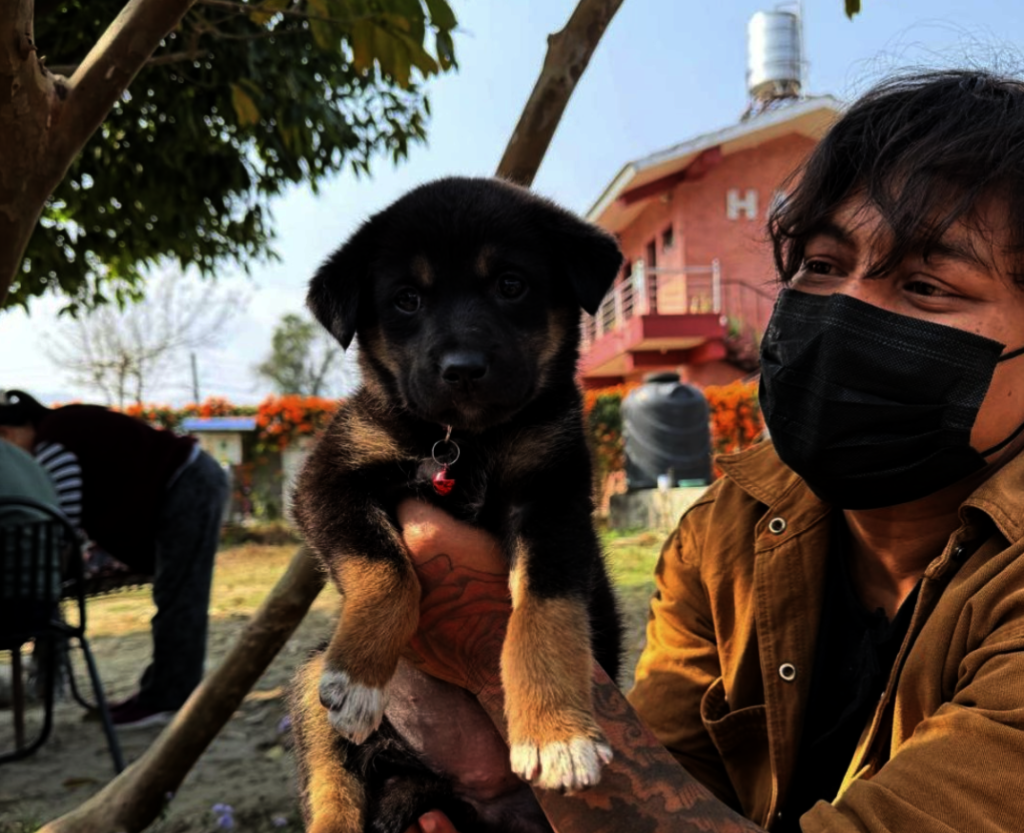
Puppy Power: We currently have four abandoned pups—Pearl, Winky, Juneli, and Gajalu—who need specialized care and vaccinations before they find their forever homes.
Whether it’s a single dog in Manang or a whole village in Myagdi, your support is the fuel behind every surgery and every second chance. Thank you for being the voice for those who cannot speak.
With love and gratitude,
By Olly | Program Rescue Team: November 2025
Dear Friend,
We’re so grateful to share an update on the last three months of life-saving work for the cats and dogs in Nepal work made possible by your kindness and generosity.
This quarter, our rescue teams have been tirelessly responding to emergencies, providing urgent medical care, and working to find safe, loving homes for vulnerable animals living on the streets or in neglectful situations.
Some highlights:
We treated dozens of animals for injuries, infections, and illnesses—everything from wounds to parasitic infections. Many were brought in barely able to walk, but with proper care, they’re now gaining strength.
Several dogs and cats received vaccinations and sterilization surgeries to help control the street population humanely.
Our adoption program has continued to find new families for rescued animals, giving them a second chance at life.
Educational outreach has grown stronger, with volunteers working directly with communities to promote kindness and responsible care for animals.
Your support has been the backbone of all this. Because of you, animals who had nowhere else to turn are now healthy, safe, and loved.
Looking ahead, we’re planning to expand our outreach efforts, increase veterinary care access, and continue our mission to give every animal a future full of hope.
Thank you from all of us—and every tail wag and purr—from the animals and people who care for them.
Warmly,
The Hart Nepal Team
A gift to this project is a life-changing gift for a cat or dog currently on the streets of Nepal. Any animal lover would be horrified at the harshness of the lives of street animals in Nepal. The goal of the project is to assist our local partners in continuing its animal welfare programmes. This project aims to end the culling of street animals and give thousands of cats and dogs happier and healthier lives within their communities.
The cruel living situations of the stray animals in Nepal is truly a horrifying sight, and with no government assistance, the poorer communities are suffering from a number of issues caused by the high stray population numbers. These animals contract and spread disease, affecting health and wellbeing in the area and the lack of funding means most animals are not neutered or spayed meaning they reproduce freely. Our project aims to combat these issues and educate the community in the process
The situation for strays in Nepal is truly horrifying and would be enough to upset anyone. Not only are these animals suffering from disease and the local authority poisoning campaigns but they also have no veterinary help and have to scavenge for food and water. Government institutions in Nepal give no assistance to animal welfare and there are no other animal welfare charities working in our partner areas, so our project is the only opportunity for help for these dogs and cats.
By neutering, vaccinating and treating street animals we produce a healthy dog and cat population that locals can respect and care for properly. By working with local authorities repeating core programmes that tackle this issue through spading, protecting and providing emergency care for stray animals, we will enable the continuation of programmes that have helped thousands of animals. With your support, we aim to roll this project out to wider communities and villages
Our partners will benefit thousands of more dogs over its next year of operation. The local communities will be protected from rabies and from other zoonotic diseases. Attitudes to animals will continue to evolve and their treatment will improve. Visitors will enjoy its beautiful location and charming facilities without being haunted by scared, diseased and unhappy animals roaming its streets, together we can improve a community and benefit the lives of thousands of vulnerable animals
By William Day | Impact and Operations Officer
By Ruban | Project Volunteer
Dear Friends and Supporters,
Remember Ratey? Three legs, zero self pity, back home in Manang like he owns the place. That is where we left you in February and honestly that energy has not let up for a single day since.
What has happened in Nepal over the last few months is nothing short of remarkable. So grab a cup of tea because we have got a lot of good news to share.
The satellite camps have gone into overdrive. Since February our team has packed up surgical kits and driven deep into some of the most remote corners of Nepal, places that have never had a vet visit before. In Ramgram Municipality we targeted 125 dogs and neutered 126. The team treated two cases of pyometra, two cases of TVT, dealt with heat that would make you wilt, and still hit every single target. In Laljhadi Rural Municipality in Kanchanpur district, 103 dogs were sterilised and vaccinated. In Belauri, 116 more. In Beldandi, the team pushed through rain and difficult roads to wrap up a brilliant partnership with Bird Conservation Nepal covering 323 dogs across Kanchanpur district in total. And then, just to finish things off properly, the team drove to Arghakhanchi and sterilised another 119 dogs across Panini Rural Municipality. They were away from home for 16 days on that last stretch. Sixteen days sleeping in the field, driving 4x4s into remote hillside villages, stopping at a temple on the way to say a prayer for a safe journey. These are the people your donations fund and they are absolutely extraordinary.
Oh and one moment that stopped everyone in their tracks. On the final day of the Rukum East camp, a woman arrived after a five hour walk from her village. She had left home at 6am to make sure her dog could be sterilised and vaccinated. The team arranged transport home for her and the dog after the procedure. When people make that kind of effort, you know this work means something.
Then there are the individual rescues and every single one of them is a story worth telling.
Mannu arrived with what looked like a ruptured tumour. It turned out to be a severe maggot wound. Three weeks of daily treatment later, she was spayed, vaccinated, and back in her community looking like a completely different dog.
Kale was found by a tourist in Sauraha with a deep infected wound on his shoulder. Twenty days of care. Fully healed. Back home.
Gajalu, who many of you will know from our program, was rushed in by a local animal lover who arrived in tears after finding him with deep wounds to his neck and face. He had been with us before for mange treatment. He clearly trusts us, and that trust goes both ways. He went home on June 9th, stitches out, tail wagging.
Lurey had a wound on his head so deep it exposed part of his skull. He had been left untreated for two to three days. Our team removed the maggots, cleaned the wound, sutured it, and six weeks later he was back with the person who rescued him.
Kali came in after a hit and run in Pokhara Lakeside, brought by a visitor from Kazakhstan who could not just walk past. Fractured jaw. Deep head wound. She had already lost an eye in a previous incident. A month of intensive care and jaw wiring later, Kali went home to the local animal lover who feeds her every day.
And then there is Puntu. A tiny puppy rescued from the street with a maggot wound so severe it had nearly reached the bone of his skull. The little guy became an instant favourite in the clinic, playing with everyone despite everything he was going through. After a month of treatment and two weeks of searching for the right home, Puntu went to live with Sunita didi from Bharatpur. He is going to be absolutely spoiled and he deserves every second of it.
We have also been thinking about the long game. Our team ran rabies and animal welfare awareness sessions for 130 students across two schools, teaching children how to read dog body language, why neutering matters, and how to be kind and responsible around animals. These kids are the future of their communities and every session we run plants a seed that will grow for decades.
Since our last report, across all camps and clinic days combined, your donations have helped our team reach and treat well over 1,000 animals, with hundreds more sterilised, vaccinated and returned safely to their communities. Every single one of them is alive, healthy and protected because you chose to give.
By Ruban | Volunteer
Dear Friends and Supporters,
February has been a whirlwind of activity for our team in Nepal. From remote mountain rescues to bustling town-center clinics, your support has traveled across difficult terrain to reach animals that truly have no one else.
The Bravery of RateyIn early February, we received a call from a high-ranking official (DSP Paudel) in the remote Manang region. He had been caring for a street dog named Ratey, who had a severely fractured and infected leg. While many suggested the “easy” way out, the DSP chose compassion and reached out to our team.
After a long journey to our clinic in Pokhara, our medical team realized that the only way to save Ratey’s life was to perform an amputation. Ratey was a “gentle soul” throughout his surgery and recovery. By February 22nd, he returned home to Manang—a proud, three-legged survivor and a symbol of what happens when we choose kindness over convenience.
The “Satellite” Success: 250+ Dogs ProtectedWhile Ratey was recovering, our mobile teams were deep in the hills of the Myagdi District. For the first time, we brought our “Satellite Neutering Camps” to Malika and Beni.
The geography is beautiful but incredibly challenging, yet the community response was overwhelming. Local residents helped our team catch dogs and even sat with them while they woke up from anesthesia.
Malika: 104 dogs neutered and vaccinated.
Beni: 147 dogs and 2 cats neutered and vaccinated.
These camps are the only way to humanely manage the dog population in these rural areas, and they are only possible because of your donations.
Building a Rabies-Free CommunityWe also completed a three-day Mass Anti-Rabies Vaccination (MARV) campaign around the Begnas Tal region. In just 72 hours, our team vaccinated 226 animals.
Every vaccine administered is a step closer to a safer world for both animals and the humans who live alongside them. To see local pet guardians contributing even small amounts (around Rs. 100) toward the cost shows a massive shift in how these communities value animal health.
Investing in the Future: Training the Next GenerationWe believe in long-term impact. This month, we also concluded an intensive 11-day surgical training program for 16 veterinary students. Under the supervision of our senior team, these students performed 118 surgeries. We aren’t just treating animals today; we are training the hands that will treat them for decades to come.
The Cost of HopeAs we look forward to March, our team is already heading to the Annapurna region for a pilot camp to celebrate World Spay Day. To keep this momentum going, we face ongoing costs that your donations help cover:
The “Ratey” Recovery: Emergency surgeries and post-operative care.
Surgical Supplies: One 4-day camp alone requires significant medical kits for over 100 animals.
Puppy Power: We currently have four abandoned pups—Pearl, Winky, Juneli, and Gajalu—who need specialized care and vaccinations before they find their forever homes.
Whether it’s a single dog in Manang or a whole village in Myagdi, your support is the fuel behind every surgery and every second chance. Thank you for being the voice for those who cannot speak.
With love and gratitude,
By Olly | Program Rescue Team: November 2025
Dear Friend,
We’re so grateful to share an update on the last three months of life-saving work for the cats and dogs in Nepal work made possible by your kindness and generosity.
This quarter, our rescue teams have been tirelessly responding to emergencies, providing urgent medical care, and working to find safe, loving homes for vulnerable animals living on the streets or in neglectful situations.
Some highlights:
We treated dozens of animals for injuries, infections, and illnesses—everything from wounds to parasitic infections. Many were brought in barely able to walk, but with proper care, they’re now gaining strength.
Several dogs and cats received vaccinations and sterilization surgeries to help control the street population humanely.
Our adoption program has continued to find new families for rescued animals, giving them a second chance at life.
Educational outreach has grown stronger, with volunteers working directly with communities to promote kindness and responsible care for animals.
Your support has been the backbone of all this. Because of you, animals who had nowhere else to turn are now healthy, safe, and loved.
Looking ahead, we’re planning to expand our outreach efforts, increase veterinary care access, and continue our mission to give every animal a future full of hope.
Thank you from all of us—and every tail wag and purr—from the animals and people who care for them.
Warmly,
The Hart Nepal Team


