
- Health & Wellbeing ·


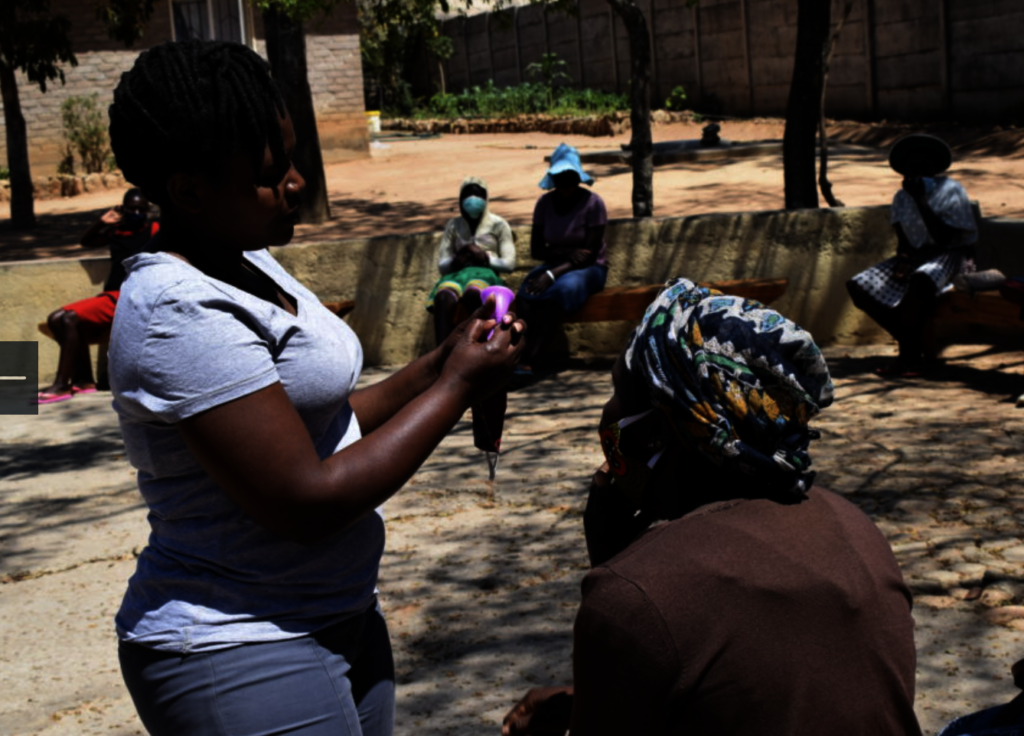
Even during the years of impressive innovation and technological success, poverty is still affecting Africa. Those affected the worst are young girls. The products first cut from the households include sanitation products, resulting in maintained gender inequality. Without intimate sanitation, girls can no longer attend school, causing them to miss up to a quarter of the school year and consequently falling behind, keeping the girls one step behind. Alongside this we also run monthly outreach sessions inviting girls and women to a safe space to talk and fight the embarrassment. At these session we hand out pads and silicon cups that last up to 10 years and reusable.
More solutions are on the market than ever in terms of intimate sanitation options. Nevertheless, without access to funds, girls in Africa continue to suffer due to something as small as the lack of adequate intimate sanitation, a household product which is often cut out in times of poverty. Consequently, girls are experiencing high levels of stigma and can miss as much as a quarter of the school year, a fact which maintains the high levels of gender inequality and poverty in Africa.
By providing funds to rural schools to invest in sewing machines and material as well as financial training we are providing schools with the opportunity to independently learn and make reusable pads for girls attending the school. This will in turn generate a small income to the school to continue to fund the initiative. We will also host workshops around the use of menstrual cups and hope to roll out a project to supply 1000 girls with these, as they last 10 years and are sustainable.
We also run outreach programs getting girls together to talk and hopefully provide pads or silicon cups to the community so they go away empowered and not embarrassed
By providing teachers, and the girls themselves with the skills to make reusable pads, the project is being established in a sustainable matter, rather than to simply buy pads which would be an ongoing cost. The skills would further be transferable and be able to assist in other income-generating initiatives. Further, it provides a greater understanding of reduced consumption, recycling and preparation for climate change as well as helping to break the stigma associated with menstruation
By shayle havemann | Project leader
 By providing teachers, and the girls themselves with the skills to make reusable pads, the project is being established in a sustainable matter, rather than to simply buy pads which would be an ongoing cost. The skills would further be transferable and be able to assist in other income-generating initiatives. Further, it provides a greater understanding of reduced consumption, recycling and preparation for climate change as well as helping to break the stigma associated with menstruation. Without access to funds, girls in Africa continue to suffer due to something as small as to lack of adequate intimate sanitation, a household product which is often cut out in times of poverty. Consequently, girls are experiencing high levels of stigma and can miss as much as a quarter of the school year, a fact which maintains the high levels of gender inequality and poverty in Zimbabwe. By providing funds to rural schools to invest in sewing machines and material as well as financial training we are providing schools with the opportunity to independently learn and make reusable pads for girls attending the school. This will in turn generate a small income to the school to continue to fund the initiative. We will also host workshops around the use of menstrual cups and hope to roll out a project to supply 1000 girls with these, as they last 10 years and are sustainable Thank you for your support
By Tyrone Bennett | CEO of Action Change
I want to be completely open with you about where we stand. We have hit a wall with our menstrual health outreach program, and it’s a tough one. Because we haven’t raised enough to keep the engine running, we’ve been forced to pause our sessions until May or June 2026.
It is incredibly frustrating to have to stop when we know there are so many girls and women who need this support, but we are using this time to get our heads down and focus purely on finding the partners and donors who can help us get back out there.
Our goal is simple: we need to secure a steady income of £500 a month to keep this program moving without these forced stops. When we have that baseline, we can stop chasing funds and start focusing entirely on what we do best, breaking down the stigma around periods, providing health education, and making sure no girl feels shame for a natural part of her life.
Our team are now focused on fundraising and if we can get enough people on board during the next few months, we can hit that £500 monthly target and make sure we are not just back in the field by May, but staying there for good.
If you have been waiting for the right moment to get involved, this is it. Even a few pounds a month makes a world of difference when it comes to keeping these doors open.
Please share this with your crew. We are not just looking for funds; we are looking for a community that believes that menstrual health is a right, not a luxury.
Thanks for being in this with us and for helping us get back to the work that matters.
By Becky | Program Lead
Hi friends
We are really excited to share an update from our menstrual health program and let you know about a new partnership we have formed
We are now working with medical grade silicon menstrual cups that are safe, last for 10 years, and cost around $10 per cup. That works out to just $1 per year per girl or woman. These cups are a game changer, but because of the stigma around women’s health and the fact that it is traditionally a non-talked-about topic, we need to run informal consultation sessions with women to ensure they use the cups correctly and feel confident with them
Our goal is to run 2–3 sessions per month for around 30 women. The cups cost $300 per month, and training, support and marketing adds another $150. Currently we are bringing in around $200, which is not enough to run the program sustainably. We also want to bring in an additional minimum of $200 to continue our pad purchase and distribution. While not a long-term solution, providing pads helps women get to know us and feel confident talking about menstrual health
Our aim is to move from ad hoc funding to a steady monthly stream so we can build stability and safety in this program. Every contribution helps ensure women and girls have access to the tools, knowledge and support they need to manage their periods with dignity
Thank you for supporting this important work
Warm regards
Even during the years of impressive innovation and technological success, poverty is still affecting Africa. Those affected the worst are young girls. The products first cut from the households include sanitation products, resulting in maintained gender inequality. Without intimate sanitation, girls can no longer attend school, causing them to miss up to a quarter of the school year and consequently falling behind, keeping the girls one step behind. Alongside this we also run monthly outreach sessions inviting girls and women to a safe space to talk and fight the embarrassment. At these session we hand out pads and silicon cups that last up to 10 years and reusable.
More solutions are on the market than ever in terms of intimate sanitation options. Nevertheless, without access to funds, girls in Africa continue to suffer due to something as small as the lack of adequate intimate sanitation, a household product which is often cut out in times of poverty. Consequently, girls are experiencing high levels of stigma and can miss as much as a quarter of the school year, a fact which maintains the high levels of gender inequality and poverty in Africa.
By providing funds to rural schools to invest in sewing machines and material as well as financial training we are providing schools with the opportunity to independently learn and make reusable pads for girls attending the school. This will in turn generate a small income to the school to continue to fund the initiative. We will also host workshops around the use of menstrual cups and hope to roll out a project to supply 1000 girls with these, as they last 10 years and are sustainable.
We also run outreach programs getting girls together to talk and hopefully provide pads or silicon cups to the community so they go away empowered and not embarrassed
By providing teachers, and the girls themselves with the skills to make reusable pads, the project is being established in a sustainable matter, rather than to simply buy pads which would be an ongoing cost. The skills would further be transferable and be able to assist in other income-generating initiatives. Further, it provides a greater understanding of reduced consumption, recycling and preparation for climate change as well as helping to break the stigma associated with menstruation
By shayle havemann | Project leader
By providing teachers, and the girls themselves with the skills to make reusable pads, the project is being established in a sustainable matter, rather than to simply buy pads which would be an ongoing cost. The skills would further be transferable and be able to assist in other income-generating initiatives. Further, it provides a greater understanding of reduced consumption, recycling and preparation for climate change as well as helping to break the stigma associated with menstruation. Without access to funds, girls in Africa continue to suffer due to something as small as to lack of adequate intimate sanitation, a household product which is often cut out in times of poverty. Consequently, girls are experiencing high levels of stigma and can miss as much as a quarter of the school year, a fact which maintains the high levels of gender inequality and poverty in Zimbabwe. By providing funds to rural schools to invest in sewing machines and material as well as financial training we are providing schools with the opportunity to independently learn and make reusable pads for girls attending the school. This will in turn generate a small income to the school to continue to fund the initiative. We will also host workshops around the use of menstrual cups and hope to roll out a project to supply 1000 girls with these, as they last 10 years and are sustainable Thank you for your supportBy Tyrone Bennett | CEO of Action Change
I want to be completely open with you about where we stand. We have hit a wall with our menstrual health outreach program, and it’s a tough one. Because we haven’t raised enough to keep the engine running, we’ve been forced to pause our sessions until May or June 2026.
It is incredibly frustrating to have to stop when we know there are so many girls and women who need this support, but we are using this time to get our heads down and focus purely on finding the partners and donors who can help us get back out there.
Our goal is simple: we need to secure a steady income of £500 a month to keep this program moving without these forced stops. When we have that baseline, we can stop chasing funds and start focusing entirely on what we do best, breaking down the stigma around periods, providing health education, and making sure no girl feels shame for a natural part of her life.
Our team are now focused on fundraising and if we can get enough people on board during the next few months, we can hit that £500 monthly target and make sure we are not just back in the field by May, but staying there for good.
If you have been waiting for the right moment to get involved, this is it. Even a few pounds a month makes a world of difference when it comes to keeping these doors open.
Please share this with your crew. We are not just looking for funds; we are looking for a community that believes that menstrual health is a right, not a luxury.
Thanks for being in this with us and for helping us get back to the work that matters.
By Becky | Program Lead
Hi friends
We are really excited to share an update from our menstrual health program and let you know about a new partnership we have formed
We are now working with medical grade silicon menstrual cups that are safe, last for 10 years, and cost around $10 per cup. That works out to just $1 per year per girl or woman. These cups are a game changer, but because of the stigma around women’s health and the fact that it is traditionally a non-talked-about topic, we need to run informal consultation sessions with women to ensure they use the cups correctly and feel confident with them
Our goal is to run 2–3 sessions per month for around 30 women. The cups cost $300 per month, and training, support and marketing adds another $150. Currently we are bringing in around $200, which is not enough to run the program sustainably. We also want to bring in an additional minimum of $200 to continue our pad purchase and distribution. While not a long-term solution, providing pads helps women get to know us and feel confident talking about menstrual health
Our aim is to move from ad hoc funding to a steady monthly stream so we can build stability and safety in this program. Every contribution helps ensure women and girls have access to the tools, knowledge and support they need to manage their periods with dignity
Thank you for supporting this important work
Warm regards


